Where The Orphans Of The Power Die: a political thriller grounded in Hungarian reality
One of Where The Orphans Of The Power Die’s greatest strengths is its structure: a multi-stranded story that shifts between different points in time and gradually unfolds.
A filmic story across multiple timelines
At the heart of the plot are:
- the mystery of a missing teenage boy,
- a secret Russian weapons programme,
- and the intertwining of past and present.
Generational trauma and male destinies
One of the novel’s deepest layers is its portrayal of male fates. It reflects the experiences of a generation that came of age in the 1990s and 2000s:
- absent or distorted father figures,
- unspoken trauma,
- inherited patterns and decisions.
The novel asks questions, but it also confronts the reader: how does the past live on in the present?
Rural Hungary as a mirror
The backdrop to the story is rural Hungary after the fall of communism. The fictional settlement of Árokvár is not merely a setting, but a symbol of:
- emptied spaces,
- lives stuck in place,
- a compressed image of the state of a country.
This milieu makes the story both especially authentic and disturbingly familiar…
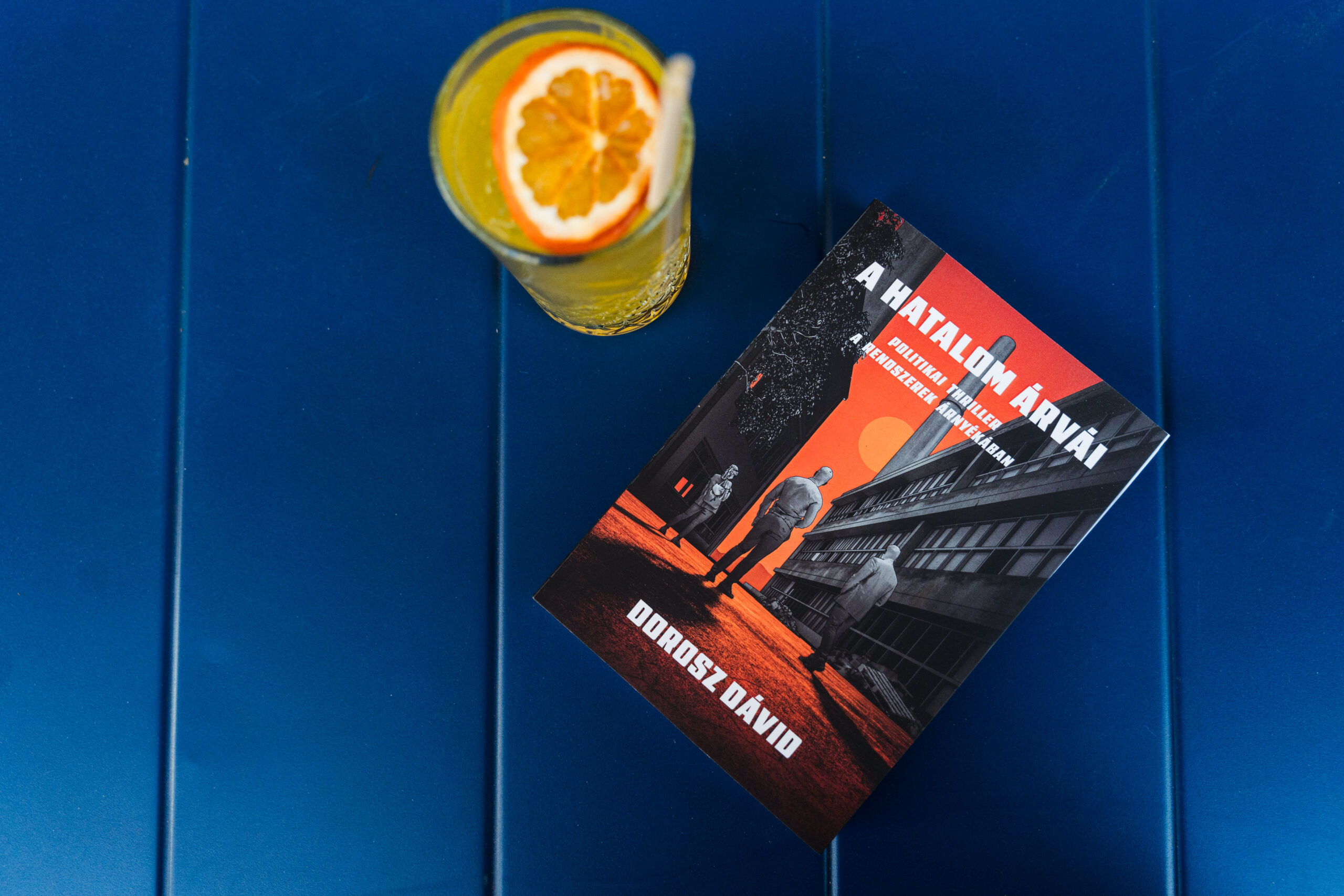
A Country’s Memory: David Dorosz’s New Novel on Post-1989 Hungary
On 24 February, David Dorosz’s second novel, Where The Orphans Of The Power Die, was published. The book examines the period from the fall of communism to the present day, and works both as a political thriller and as a personal drama…
The author’s first book, We All Leave, was shortlisted for the Margó Prize in 2025 and quickly attracted significant readers’ attention. A film adaptation of the story is currently being developed by the same production team behind I Feel at Home Here, starring Áron Molnár and Rozi Lovas. The author is also taking part in the development of the screenplay, so the story is not simply being transferred into another medium, but rethought in a new form…
The atmosphere of the story is shaped by rural Hungary after the fall of communism: emptied spaces, lives left in limbo, and a fictional location, Árokvár, which is not merely a setting but a compressed image of a country’s condition…
The book has already provoked a strong response at its launch: according to Anna Ott, it “should be made compulsory reading”, and the text was first brought to life on stage, performed by Alexandra Borbély…
- From the recommendation of KultúraOnline.hu –
Power, Trauma, Generations in David Dorosz’s New Novel
David Dorosz’s second book, Where The Orphans Of The Power Die, tells the story of what has happened to us from the fall of communism to the present day — and what we have never truly processed…
The strongest layer of the novel lies in its portrayal of male destinies: absent or distorted father figures, inherited patterns, unspoken trauma. Rather than over-analysing events, the book shows how all of this becomes part of everyday life.
“It is about us and our past forty years — about lost hopes, and the lie that ‘we only have to hold on a little longer’,” the author revealed in connection with the new volume. “I wanted to write a story that not only pulls you in, but also holds up a mirror.”
- From the BSIDE recommendation –